
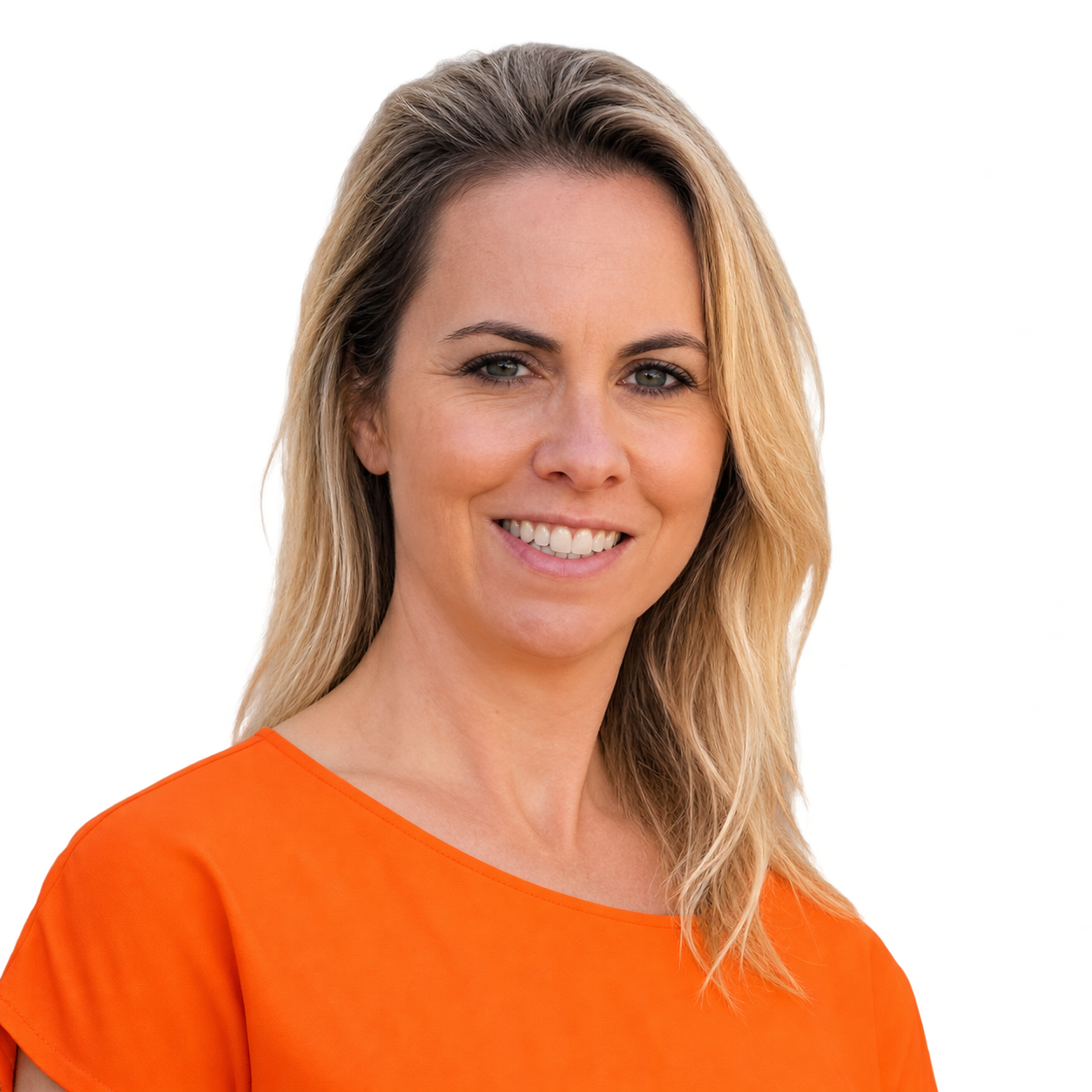
Tessa Clarke
Co-founder & CEO of Olio
How Olio turned spare food into a business, with Tessa Clarke
Tessa Clarke is the co-founder and CEO of Olio, the app that connects neighbours to give away rather than throw away their spare food and household items. A decade in, Olio is a community of 10 million people, with 100,000 trained volunteers collecting unsold food from Tesco and other big food businesses, and more than 150 million meals saved from the bin.
A farmer’s daughter from North Yorkshire, Tessa spent nearly twenty years in the corporate world, from BCG and Dyson to turning around Wonga, before a moving-day lightbulb moment (and some cross-border vegetable smuggling) led her to build one of the UK’s best known tech-for-good scale-ups, backed by more than $50 million from investors including Accel, Octopus Ventures and VNV Global.
In this episode, Desi sits down with Tessa to uncover:
- How a WhatsApp group with twelve neighbours became an app that was “only slightly better than a WhatsApp group”, on purpose
- Why a food-sharing app launched with no food, and how that problem became Food Waste Heroes, the model behind over 90% of Olio’s revenue
- How Olio got supermarkets like Tesco to pay to give their food away
- What it took to raise five rounds as two female founders of a tech-for-good business, and the research that changed how they answered investors
- The 2023 restructure: scaling up to a full senior team, then shrinking back, and how the culture came out stronger
- Inside the ads decision, and why Tessa would rather be alive and having impact than perfectly principled and dead
- Why our guts are “the original AI system”, and how Tessa and Saasha make big calls at 40 to 70% certainty
- Whether we’re actually ready to consume less, and what has to change before we are
If you’re building a marketplace, a mission-led business, or anything the odds say shouldn’t work, this one’s for you.
Transcript
Please note this transcript is automated
Desi (00:00) I want to start with the contrast that made me want this conversation. Your last corporate job was being brought in to turn around Wonga You were the managing director of UK Consumer Loans, if I'm not wrong. And as the biggest payday lender, they were one of the most hated companies in the UK back then. And barely one year later, you're building Olio, a business whose entire idea is giving things away for free, sharing with your community. What happened in between?
Take me back to this moment.
Tessa - Olio (00:32) happened in between was I had a baby. Yeah so I...
as you say, was brought in to kickstart the turnaround of Wonga. That was an extremely challenging role. I learned an enormous amount through doing that, but it was very clear to me that that was not a company I wanted to work for for a long time. It was certainly not a sector that I wanted to be in. And I knew that I wanted to do something entrepreneurial and I'd had a sort of growing entrepreneurial itch for several years, but the challenge was I didn't have an idea
or I thought that was the challenge at the time. I've since realised that if you want to do something entrepreneurial, don't go around looking for an idea. Instead, look for a problem that you are really passionate about solving. And that problem came into my life when I was on maternity leave and I was moving home, moving back to the UK, and on moving day, the removal men told me I had to throw away all of our uneaten food. And that was very much the light bulb moment for Olio because being a farmer's daughter, I was not prepared
to put that perfectly good food in the bin. Instead I went out in the streets to try and find someone to give it to. I failed miserably. I went back to my apartment and I essentially resorted to cross-border vegetable smuggling and that was the point where I thought that I really was going to very extreme lengths here and that perhaps there should be a digital solution, maybe an app that could easily connect me with my neighbours so I could give away rather than throw away my spare food.
Desi (02:06) You physically couldn't put good foot in the bin. Where does that reaction come from? Why was it so important to you?
Tessa - Olio (02:13) Yeah, I grew up on a farm in North Yorkshire, so the northeast of the UK, and in my family, when you spend, you know, what would sometimes be 16, 18, even 20 hours a day working incredibly hard to produce food, the last thing you're going to do is toss it in the bin. So I have always been brought up with a really keen appreciation for the true value of food, not just for its hard work, but because of its environmental impact, its nutritional value, its social
value and I yeah just to me it felt more criminal to put perfectly good food in the bin than it did feel to smuggle it across borders so smuggle it across borders I did.
Desi (02:55) Why not?
And what did you build for anyone listening who's never opened the app? Explain Olio to me who gives, who gets, and who pays.
Tessa - Olio (03:04) So Olio is an app that connects people with their neighbors. They can give away rather than throw away their spare food and household items. It's very straightforward to use. You just snap a photo of your spare food or perhaps your toiletries, books, clothes, toys, et cetera. You add them to the Olio app. People living nearby get an alert. They can then browse the listings, request what they want and pop around and pick it up. So Olio is hyperlocal, mobile first or mobile only actually. And another part of our model in addition to the pure play
C2C proposition so neighbors giving away spare food and household items to one another we also have a hundred thousand food safety trained Volunteers who collect unsold food from businesses so this could be supermarkets It could be an office canteen it could be a school canteen TV and film production shoot Anywhere where there's perfectly good food going to waste our volunteers spring into action they rescue that food They take it back to their home They add it to the olio app so that their neighbors can request it and pop around and pick it up and that is the
largest source of our revenue so we monetize in that way. the moment businesses have to pay waste contractors to take that food off to waste streams and instead they pay us and we make sure that it is eaten and we give them back their impact reports covering both the social impact and the environmental impact, lots of user testimonials etc.
Desi (04:25) Marketplaces are some of the hardest products to get off the ground and I've seen the chicken and egg problem in my own work many times. So I can imagine how challenging it was in the beginning. And I think in your case we had like an extra twist nobody really talks about and this is the people who hate food waste the most.
probably don't waste food, right? So your most passionate users, they often they they have nothing to share. So what did you get right in those early days to get the flywheel moving before the B2B edition and everything? What do
Tessa - Olio (04:59) Mm.
Desi (04:59) you think you did right? The most crucial decisions back then?
Tessa - Olio (05:03) Yeah, so you are absolutely right in saying marketplace businesses are renowned for being particularly challenging because you have to balance and scale both the supply and the demand in lockstep with one another. When you then layer on for the fact that we're building a marketplace around food, which is a highly perishable source of supply with lots of kind of food safety considerations, that makes it even more challenging. And then layer on top of that, the fact that
that
by its very nature, because it's a marketplace for food, it then needs to be hyperlocal, that makes it, yeah, that next degree more complex. So we definitely set ourselves an extremely challenging problem to solve. I think some of the things that we did right in the early days were we were extremely focused from a geographic perspective. So the very first version of the Olio app was only available
in
five postcodes in North London. So we knew that we needed to really learn and optimize the model at a hyper local level before making it available more broadly. We also were extremely clear in terms of our brand messaging and positioning kind of what our mission was. And that really was like sort of putting out beacon to our target audience and it really helped attract them to the app.
thing that we didn't do, which people might find sort of quite interesting, is we didn't over complicate the product. So we had a natural tendency to think, well, because we're connecting neighbors to share food, we need to have all these safety and privacy mechanics in place. We've got to have user ratings and reviews, for example, before we even launch. But we did a proof of concept using WhatsApp in advance of actually building the app. And when we had feedback,
from those people who had participated in the WhatsApp proof of concept, they gave us some really powerful advice which was, don't over complicate this, it only needs to be slightly better than a WhatsApp group. And that really gave us the confidence to strip back the feature set just to, think, at launch it was just like five or six steps that a user need to be able to take to use the product, that was it. And we didn't deviate from that critical path at all. And that meant that we could get
to market more quickly, it meant we could get user feedback more quickly, and funnily enough, was another, I think it was about 18 months or maybe even two years before we launched user ratings, for example, because the actual user feedback told us that other features were more important than that feature. So I think not over-complicating and getting to market and getting real user feedback as quickly as possible was another really valuable thing that we did.
Desi (08:03) How did you get that early traction to find the first users? Did you use like any traditional marketing? Did you use any digital advertisement? Do you recall that period?
Tessa - Olio (08:13) I
do, I recall it very vividly because it involved a lot of blood, sweat and tears, a lot of very manual activities, a lot of very non-digital things, which again, I think is something that we did right. It's quite counterintuitive to a lot of digital or mobile first founders. They assume that from day one, everything needs to be super scalable and that you can do it from behind your laptop. But we quickly realized that actually if you want to build density for a hyperlocal marketplace, you need to get out into that.
about
hyperlocal community. And so in the early days, we did an awful lot of community events. We did lots of hyperlocal guerrilla marketing, so posters, letters, flyers, just kind of the old school activations and activities that turned out to be very cost effective and they helped really get cut through. Then in terms of paid marketing, over the years we've experimented with every single marketing channel, you know, kind of above the line, below the line,
performance marketing, PR the lot. And what we've found to be most effective has been the performance marketing and the meta-based platforms that has always delivered for us the scale at the ROI that we needed.
Desi (09:31) Amazing and the app has always been free for users, right? So that feels
Tessa - Olio (09:35) The app has always been free
for users apart from on one day when we knew that we wanted to run an experiment as we were thinking about our monetization, our business models, we strongly suspected that if we wanted to build a marketplace, a marketplace requires you to get to scale on both sides of the market. And also with a highly perishable product like food, we didn't want to put the barriers in the way of anyone either giving it away or requesting it. But in the interest of experimenting continually, yes, for
One day, the Olu app was a paid app and yes, we got the data which actually validated our hypothesis that we should not turn it into a paid app.
Desi (10:16) Did you get like lots of negative comments and feedback? Were people furious?
Tessa - Olio (10:19) No, was more
the, so from a revenue perspective, it sort of quote unquote worked, but in terms
Desi (10:27) Yeah.
Tessa - Olio (10:27) of the outcome they were optimizing for, i.e. food and household items being added to the app and then being picked up, it actually decimated that KPI, which was our whole raison d'etre. Therefore, it didn't make any sense to put that massive barrier right at the top of the funnel.
Desi (10:45) Over the years you've had to add the B2B program, subscriptions, and then recently even ads. I had Sanjay Lobo from On Hunt on the show,
Tessa - Olio (10:55) Yes.
Desi (10:56) and he had to pivot the whole business to B2B model just to save it.
Tessa - Olio (11:01) Mm-hmm.
Desi (11:02) How do you make those monetization calls without breaking the thing that makes Olio Olio? And still 10 years in, how do you make those goals?
Tessa - Olio (11:12) Yeah, so we were very fortunate in that our earliest investors were very experienced marketplace investors and they really backed what we intuitively thought, which is that for a marketplace business such as ours, especially when it's kind of a first of a kind model, what was important was that we spent the early years making that model work and essentially creating a valuable proposition for lots of people. And then once you get to scale,
or
you start thinking about how you can monetize it. And I'm really glad that we did that because we had to develop and evolve the model so much just to make the core user experience work that that is what then created new surface areas for monetization. So the biggest example of that in our history is that as you alluded to already in the very early days, our early adopters hated food waste, therefore didn't generate.
any, therefore had nothing to put on the app. And we were working with local cafes and corner stores to see if they would put their unsold food on the OYO app at the end of the day to drive incremental traffic into their store, cross-sell, upsell, etc. And we discovered they were far too busy running their day-to-day business to be messing around messaging with members of the community on an app. So we're a food sharing app with no food. And how we sold for that was we said, well, why don't we take the people who have plenty of spare time, but
no surplus food and match them with the businesses that have lots of surplus food and no spare time. That then became our Food Waste Heroes program where today we have 100,000 food safety trained volunteers. And then the monetization fell very naturally out of that because it became clear that one, we were adding a lot of value to those businesses that we were working with, but two, one, as we started to scale that program up, we couldn't afford to finance it ourselves. We had to develop a business
model that required the businesses that were getting the value to pay us for the value that we were providing. And that now is how we generate over 90 % of our revenues. Essentially, it's a recurring revenue model and businesses are paying us either on a per location, per year basis, we have now increasingly have an estate fee type model, which is all of their locations can use the Olio service as often as they would like. So I think kind of delaying
the monetization until we really understood what the user and product experience was like, then opened up surface areas for additional monetization.
Desi (13:53) I find food waste heroes really fascinating. So how you somehow got supermarkets to pay you to give their food away. and
Tessa - Olio (14:02) Yes.
Desi (14:03) with Tesco, if my research is right, this happened back in 2020. So you were quite a young startup back then. So how did you put this off, right? So there must be a secret,
Tessa - Olio (14:10) Yes, Yeah.
Desi (14:13) you did again something right back then.
Tessa - Olio (14:15) Yeah, so we, as we do with everything, we started small and we experimented. So our first Food Waste Heroes programme clients were actually sort of friendly corner store owner operated businesses that were happy to participate in this wild experiment with us. They hated food waste and they wanted to see if we could co-create a solution together. So we started off working just with a couple of corner stores in North London. Then once we'd worked the model through with
Then
we expanded to Planet Organic, who I think at the time had sort seven stores and was the first sort of big brand that we worked with. Then after that, we worked our way to Pret a Manger, so the first truly national brand. We were redistributing from over 100 stores there. That was a massive moment. And it was about three years later that we finally managed to secure Tesco as our flagship client. And that was a real turning point for the scale of the business.
really, really dramatically accelerated our growth. But we would never have been able to secure a client like Tesco if we hadn't already been through all those proof points, ironed out all the challenges, so that by the time we were ready to roll out with them, we knew we had a model that worked really well and it was highly scalable.
Desi (15:36) So it sounds like that demand and desire from those companies was there. There was just nobody to facilitate this, there was no supplier like you to do this for them. Is that what you found that you're almost meeting demand back then?
Tessa - Olio (15:50) I mean sort of yes and no. So I would say that the most forward leading and visionary organizations such as Tesco, which had set itself very ambitious food waste reduction targets, they were looking for or open to a solution that would help them meet their targets. But the sad reality is that today, too few businesses have food waste reduction targets, are really taking food waste reduction
seriously, which is particularly criminal when we've got roughly 10 million people living in food poverty in the UK and food waste is 10 % of global greenhouse gas emissions. So we are having to sort of make the market as we go along and we've started off by
Desi (16:39) Right.
Tessa - Olio (16:39) focusing just on those early adopters and then we have to use the case studies that we've got with them, the logos that we've got, we try and wherever we can sort of code
who present at industry events, for example, and that helps to build the pipeline.
Desi (16:57) Do you sometimes feel a bit lonely, like the pioneer staying at the forefront of food waste revolution? Like we need more yeah.
Tessa - Olio (17:06) It's.
Yeah,
it's less about feeling lonely, more about feeling intensely frustrated that we've built this incredible, highly scalable, highly effective solution that solves so many of humanity's most pressing crises, the climate crisis, how are we going to feed not only the population we have now, but a rapidly expanding population, the biodiversity crisis, the resource pollution crisis, food waste kind of touches on many of
these things and it's really really frustrating that we are having to work so hard as a tiny startup with no marketing budget to drive awareness of the problem before our solution can even be adopted.
Desi (17:53) Do you get support from local councils or the government or any kind of central organization?
Tessa - Olio (18:00) Sadly not, no. You would think that the government would recognise that we can solve so many of their most pressing problems, but the reality is government doesn't quite work like that. And then in terms of working with local authorities, we have over the years worked with a number of, again, the more progressive local authorities, and we've built a suite of tools and communication toolkits that local authorities can use to spread the
to their constituents about Olio, but we haven't been able to invest an enormous amount of time in this because there are hundreds of local authorities across the UK. Generally, they're extremely slow moving and so it's just a very, and they also don't have budget, so it's a very inefficient way to acquire new users to our marketplace. It's far more scalable and efficient to use the meta-platforms, for example.
Desi (18:57) Right. And you also have like the volunteers, how many do you say the hundred or a hundred and fifty thousand volunteers that
Tessa - Olio (19:02) 100,000,
Desi (19:05) do this completely for free? So how
Tessa - Olio (19:08) Yeah.
Desi (19:08) do you run this kind of unpaid workforce to make sure that
Tessa - Olio (19:12) Mm-hmm.
Desi (19:12) it is operating properly?
Tessa - Olio (19:15) So that is what consumes an enormous amount of our time as an organisation. So we have really nailed, I guess, the ability to convert our community into volunteers. So every month we have between 50 and 70,000 new people joining the OLEO community. And every month, a certain percentage of them converts to become new volunteers. And we train them online on our food safety management system. Once they're trained, they can claim a collection
and a collection slot is an opportunity to rescue surplus food. And they can either do that on a recurring basis. I will do every Monday, 8.30 p.m. my local Tesco, or they can do it on an ad hoc basis. So they can just pick up collection slots that are available. Where we spend most of our time is less on the recruitment and training and much more kind of on the compliance side of things. So making sure that all of those volunteers show up.
when they should, how they should, that they safely collect that food and redistribute it according to all of our rules. So we spent a lot of time harnessing machine learning, AI, people power to develop a system of reminders, suspensions, and even bans to make sure that volunteer community shows up in the way that they need to.
Desi (20:37) Do you think you would be getting more support had you decided to run this as a charity? Because you are a business organization, right? So you made the decision, you wanna
Tessa - Olio (20:46) Yes. Yeah.
Desi (20:48) run a successful business and we can do good and be profitable.
But maybe
Tessa - Olio (20:52) Yeah.
Desi (20:53) had you decided to be a charity, things would have been a bit easier for you to run all of this.
Tessa - Olio (20:59) Genuinely,
think things would have been. So in the early days, Sasha and I were aware we had a decision to make. Are we going to set up a company or do we want to become a charity for us? The decision was quite clear that we want to set up a company. One, neither of us had any experience running a charity and we appreciate that a charity is a very different kettle of fish than running a business. Whereas between us, we had over 40 years of corporate experience. We also knew that we didn't want to
be dedicating a large part of our time and emotional bandwidth to just be continually fundraising in the way that charities have to. And then also, as we looked at the scale of the problem that we were trying to solve, we believe and still do believe that business is the most effective way to solve many of society's largest problems because I can't think of many slash any examples of charities having scaled as quickly as Dropbox or Instagram or
or Facebook or, you know, take your pick. Now what we have discovered is that unfortunately as a society, and it's deeply frustrating to us, we live in a very, very binary view of the world whereby people think either if you're doing good you must be a charity and they are deeply suspicious of a business trying to have a positive impact or you're a business growing like crazy but probably creating all sorts of negative
impact for planet and people.
We believe very, very firmly in the third path, which is that sort of profit with purpose type model. We do believe that that is going to be the model of business in the future. And so we have just stayed in the trenches trying to demonstrate that business pointed in the right direction can be one, commercially, not just viable, but very attractive, but then two, have proper impact at scale. But we have businesses, for example,
that will refuse to work with us to redistribute their surplus food because we are a business, not a charity, and therefore they will continue throwing away their food and wasting their food because there aren't charities that can solve their food waste problem how we do. So that's particularly infuriating.
Desi (23:24) Why that?
Tessa - Olio (23:25) You would
have to ask them why they are happy to pay their staff to put perfectly edible food out in clear bin bags on the street, upsetting their customers, upsetting their employees. The charitable sector can't redistribute slash doesn't want their food and yet they still insist that they will only work.
with an organization that's a charity to redistribute their surplus food. It's just an example of kind of how entrenched it is in many people's minds that you have to be a charity to do good.
Desi (23:57) And yet profit for good.
profit with purpose. it doesn't sl it doesn't sound like the perfect investor's profile but you did really well. So let's talk a little bit more about your investor's journey. Two female founders bought new mums building tech for good on
Tessa - Olio (24:16) Yep. Yep.
Desi (24:18) paper everything about that profile is against the odds in the startup world, right? So and
Tessa - Olio (24:24) Yes.
Desi (24:25) you've raised you've raised over fifty million dollars. So how did you do
Tessa - Olio (24:29) Mm-hmm.
Desi (24:29) that?
Tessa - Olio (24:30) Yeah, so you're absolutely right. Everything we've done has been enormously against the odds. It has come at a big personal toll. It's just certainly been mentally, physically, emotionally exhausting trying to fight against those odds. We have, however, managed to successfully raise financing across five different rounds. And I think there are a couple of things that have enabled us to do that. First of all, we...
we identified an enormous problem that really, back in 2015, no one was aware of, no one was talking about. It was undeniably an enormous problem. know, globally, we threw away over a trillion dollars worth of perfectly good food. And we were very fortunate in that our early investors really believed that if you've got a TAM that is that big and if you back an experienced team, which what Sasha and I were,
then you will find a way to build a very attractive business off the back of that. I should say that our early investors, probably about three-quarters of our cap table were either women or people of colour, and I think that that is not a coincidence. And I think it is because...
Investors who have that minority demographic profile understood the problem that we were trying to solve much more keenly and were intuitively very excited by the type of solution that we were bringing to the table, in particular that combination of technology and community. And...
We also were very aware of the biases that existed against us as two female founders with an early revenue tech for good business. And we knew that both the conscious and unconscious biases are that we're not particularly commercial and we're not particularly ambitious. So we knew that at every single touch point, every single piece of messaging from the clothes we wear through to the speed at which we talk through to the order of the slides on our deck needs to reinforce to people that we are both ambitious and
commercial. And then perhaps one of the most important things I did was watch a video by Dana Kansy, who is a university professor who did some research to understand why is it that female founded businesses only get 2 % of all venture capital investment, whereas male founded businesses get 85 % and mixed teams get the delta. And what she uncovered is that female founders have a very different fundraising and pitching experience than the male founders. Specifically, female founders are asked what she
refers to as prevention-based questions. So they're all the downside questions. What happens if Google or Facebook come in and compete against you and destroy your business? And male founders are asked promotion questions, which is how fast can you grow? What's the upside here? Can you launch additional products? What would you do if I gave you an extra million pounds? And the solution that she recommends, which I can attest to working, is that when you are on the receiving end of those prevention-based questions, which we were continuously,
you answer them with a promotion based response. So you kind of flip it around into that positive territory.
Desi (27:47) wow, give me an example of that.
Tessa - Olio (27:51) gosh, to be honest, I haven't fundraised for five years. I've still got PTSD from it.
Desi (27:53) Ha ha forgot to
Tessa - Olio (27:55) So I don't have any immediate examples, top of mind, but I'm sure your listeners will figure out what that means in their existence. But basically just kind of.
Desi (28:03) we'll put that yet talk and put it in the
Tessa - Olio (28:07) answer the question, the downside bit, and then flip it into the and then, but this and layer on that much more promotion type approach into your answers.
Desi (28:22) Did you feel you had to talk a bit louder, a bit more like mainlike, a bit to be a bit more cocky even if it doesn't come natural to you to be dressed in a certain way? Did you experience all of that?
Tessa - Olio (28:31) Yes, yeah, for sure, of
course. Yes, yeah, no, I mean, of course. I would never dream of fundraising wearing pink or anything that has any flowers on it. So those kind of minor, and I would always...
bias towards a much more professional attire through to, as I say, how you present the content of your deck and the order in which you do it. So for example, in the early days, we were struggling to have people take us seriously. They kept on talking about us as you girls with your project. And so what we did was we made the very first slide of our fundraising deck, a slide which had a photo of the two of us and then it had
all of our seals of approval from all these really sort of prestigious organizations that we'd studied at or companies that we'd been leaders in to really force the audience to take us seriously and then really listen to what follows. Whereas previously we had our credits and stuff to do at the back of deck. So that was just a small example of us adapting to make sure that we were listened to properly.
Desi (29:46) Interesting. So after your latest round, which was in twenty twenty one, there
Tessa - Olio (29:51) Yes.
Desi (29:52) was this kind of quick growth for a couple of years. And
In 2023, there was a bit of a rough patch there. So there was a harder
Tessa - Olio (30:02) Yep. Yeah.
Desi (30:05) chapter of your journey.
Tessa - Olio (30:06) Yep.
Desi (30:07) The team shrunk significantly. Take us through that period. So what wasn't working?
Tessa - Olio (30:09) It did, yeah.
Desi (30:12) Why did you feel like first you had to grow and then you
Tessa - Olio (30:15) Mm-hmm.
Desi (30:15) had to go back to basic and shrink the team?
Tessa - Olio (30:18) Yes, if we go back to 2020 and 2021, that was COVID era and that was when
Desi (30:26) Yeah.
Tessa - Olio (30:27) the world woke up and we collectively realised that the climate crisis is not only real, but it was happening and it's happening now. We also learned that we had become very disconnected from our local communities and actually many of us were craving to reconnect with our local community. So Olio being a really simple effective
to the climate crisis, which involves reconnecting people with their local community, was a great proposition and we were in the right place at the right time. And so we had an incredible sales pipeline, businesses were lining up to work with us to redistribute their surplus food. Then the war in Ukraine.
started and that then really was the start of macroeconomic unraveling which resulted in businesses suddenly firefighting on many fronts whether it be the interest rates, the cost of living crisis, the supply chain shocks that they were having to deal with etc etc and
Couple with that with the Trump.
administration coming in in the US, the anti ESG wave that absolutely came across the ocean. All of those things collectively meant that our sales pipeline dramatically slowed down and we had sort of scaled up the organization. We brought in a whole suite of SLT members, so our first ever CMO and CTO and CPO and People and Culture Director. These were all positions that we'd never been able to
Ford before we then had the financing, there was strong pull from the market and so we scaled up. But then as that unraveling took place, it was just incredibly clear to us that we needed to downsize the organization to reflect the macroeconomic reality that we were living in. And it was not just a reaction to the macroeconomic environment, although it was very much driven by that.
we had also found that we'd gone from being a scrappy startup to a scale-up sort of in one fell swoop and there were many things that bringing in our new senior leadership team did that was brilliant and they came from you know everywhere, Uber and Airbnb and all these just incredible places and they were amazingly talented human beings. They helped level up our systems and processes, they helped level up that next layer below them in the organization.
But the downside of that was that we did sort of grind to a halt in terms of the pace with which we were able to deliver value to our end users and just get stuff out into the market. And so part of that restructuring, it was incredibly difficult and incredibly painful. We did it to the best of our abilities, really leaning on our company values. But what we found coming out the other end was that we were much more nimble, much more lean, much more agile.
as an organization. And so it really felt like we were, we now talk about the fact that we're in Olio 3.0, which is combining the very best of Olio 1.0, Scrappy Startup, with Olio 2.0, the scale up.
think one of the other learnings is that next time around, rather than defaulting to immediately sort of hiring in that senior expertise as full-time employees, next time around, I think we are, and already we're kind of doing a little bit of this, is thinking, how can we provide our current team with the coaching or the mentoring or the training courses or bringing fractional capabilities or bringing a
consultant and sort of level up in that way because what we really learned is that getting that fit right for culture and your cultural velocity is actually much harder than bringing in the expertise that you need.
Desi (34:40) Yeah, that's what I was gonna ask actually. How did your team kind of take that transition? What did you tell them and
Tessa - Olio (34:47) Yeah.
Desi (34:48) did you feel like you actually had the right values and culture internally to be able to handle that? What was kind of the
Tessa - Olio (34:56) Yeah.
Desi (34:57) mood inside the organization back then?
Tessa - Olio (35:00) So we
have just four company values. They are inclusive, resourceful, caring, and ambitious. It's just four words so that no one has any excuse not to know and understand what our company values are. We recruit to them. We onboard people to them. We do 360 feedback against them. We, through our employee satisfaction surveys, I'll say we want to rate ourselves against them. We make business decisions using them, including when we were going through the restructuring. And in particular,
the
value really, really came out loud and clear through the restructuring. we treated our team members who had to leave Olio in the best possible way that we could, both emotionally and financially. We were as generous as was possible and that worked incredibly well because it meant that a very difficult process to go through was just less challenging.
who stayed could see that their colleagues had been treated to the best of their abilities and also something we really invested in was taking the team through
the narrative, the journey, the rationale, the data we'd looked at to make the decisions that we've made. And by really, and so I was having to kind of give the company like economics lessons to explain the relationship between inflation and interest rates and the venture capital market, for example, and through really giving people that narrative, because I realized that at the end of the day, everyone's gonna have to explain to their friends and family what has happened. And if they can't explain,
explain what has happened and why, it puts them in just a really difficult situation and makes sure to pause a vacuum. Other stories fill up those vacuums. So we've really invested a lot and we're super transparent around what we did and why.
And I think that combined with our values really helped us kind of get through the process. And we measure a bunch of metrics through our employee satisfaction survey. And we've done a couple of restructurings now and every single time our scores have bounced back pretty much immediately. And Vermeer has really demonstrated that you can go through restructuring exercise and actually your culture can come out just as strong, if not stronger, afterwards.
if you take the time to do it properly.
Desi (37:33) And if you recruit the right people, right? Because making sure that you have the right people on board to be actually prepared to take that, it's a huge part
Tessa - Olio (37:41) Yes. Yeah, 100%.
Desi (37:44) of probably why this was successful. I work in branding and a big part of my job is injecting mission and values into companies. And honestly,
Tessa - Olio (37:53) Yep.
Desi (37:53) sometimes you can feel it's fabricated. The team f
Tessa - Olio (37:56) Yes.
Desi (37:57) the team feels it too, right? If it's not authentic, the culture
just never sticks.
Tessa - Olio (38:00) Yeah.
Desi (38:03) Always the complete opposite. From what you're saying, I can see the passion in you, I've done my research. So the
Tessa - Olio (38:08) Yeah.
Desi (38:09) mission is the company.
Tessa - Olio (38:11) Mm-hmm.
Desi (38:11) has the mission ever made the business harder? Do you have we ever felt that? What is a decision you've made that you feel a profit first CEO probably would simply never make or make different?
Tessa - Olio (38:26) So there are examples, so broadly I would say, profit with purpose, ferroleo, or lockstep with one another. So most people try and position as profit and purpose as being in conflict, and they are constantly able to trade one off versus the other. Nine times out of 10 for us, that is not the case, because the more food we save,
more listings that come onto the platform, more impact we're having, both social and environmental, and the more revenues we're generating because we're being paid to redistribute that food. So we have a profit with purpose baked into the DNA of the business model. But of course, there are instances around the edges where those two things might come into conflict with one another. So an example of where we have prioritized our company values,
ahead of profitability might be through the huge amount of investment that we have made into building a community that is really safe and secure.
For example, we introduced SMS verification of our community, I think when there was just half a million people on Oleo. Now, the other big social media giants that have also been busy building communities didn't introduce any form of verification of anything until much, much, much, much, much further down the line. We've invested an enormous amount in terms of removing harmful or unpleasant or unwelcome content from our platform that again, those large
social media giants didn't. They just optimized for engagement, whereas we've been optimizing for impact and impact through the lens of our values. So there's some examples of where guess we've kind of gone slower.
in service of our mission and values. Flip side of that would be for many years we did not introduce advertising into the app. I cannot stand the advertising business model. I think it's deeply toxic, but we reached the point where we needed to get closer to profitability. We had tried every other lever to encourage our community to upgrade, to become an OLEO supporter. So, buy our monthly subscription.
mechanic, but that was only taking us so far. the key insight that we learned through talking to our community is, we said, well, we're not going to upgrade for the supported version because the core version of Olio is so amazing, like there's nothing extra you can add me, add that will encourage me to upgrade. And so we realized, gosh, unfortunately, we're to have to degrade the core user experience to encourage people to upgrade. And the most effective, efficient, scalable way to
slightly degrade that experience was to introduce advertising into the app. And we introduced advertising not for the revenues it was going to unlock, but more as a mechanic to encourage people to upgrade to become an Olio supporter. But also through introducing advertising, much we don't like that business model, it does help us fulfill our number one company value, which is inclusive, which means that anyone can always use Olio for free. And advertising enables us to do that, which is why we didn't go down.
down
the route, for example, of making earlier a paid-for app, which people suggest to us the whole time. Why don't you just make earlier paid-for app? We don't want to do that because that's not inclusive.
Desi (41:53) Take me inside the ads decision. Was it hard for you? It took you ten years. You could have done that long time ago. Why did it take you so long? What tipped it?
Tessa - Olio (42:02) Well, didn't take us quite 10 years, because we took that decision a couple of years ago, and we only started monetizing two years into our journey. So let's say it probably took us four or five years to take that decision. And we didn't take that decision because there were lots of other levers that we could pull and ways in which we could monetize that we wanted to experiment with first before having to resort to advertising. But when you reach the point where all your other hypotheses
have not worked out how you would like, then we realised that it's better to be alive and having impact than being perfectly principled and dead and therefore not having any impact. So at the end, it was a pretty straightforward decision to make.
Desi (42:52) A lot of brands exist to make people want more. I mean, especially I mean mentioning the advertisement industry. And your entire company exists because we already have too much. We've built
Tessa - Olio (43:04) Yes.
Desi (43:04) a world that runs all over consumptions, right? It is disgusting. Many people realize it. I'm sure quite a lot of your tribe is how how they feel. and only essentially a bet against it. Do you think people are ready to consume less? Do we think we have
Reached the point where we've said enough is enough, now it's time to rethink and reconsider how we've built the whole economy.
Tessa - Olio (43:30) So the honest...
answer, not the idealistic answer, is no, I do not yet think we have reached that point. So I think there is a thin slither of society who are starting to realize that buying more stuff is not making them happier. And that actually kind of making that switch to living with less is not only saving them money, but actually it does make them happier, feel more fulfilled, because they can spend that money in different ways and they can spend that time in different ways. But I think that that is only a
tiny proportion of society and the reality is we are not going to flip into a sustainable model for our economy until we redefine what success is. from the very very top, humanity's North Star metric at the moment is GDP growth and so long as we define success by GDP growth which is essentially kind of selling more stuff and governments and business leaders are all optimizing towards that North Star metric.
then we are going to continue to create an environment which at every single turn is incentivizing, cajoling, persuading people to consume more. The minute we start to redefine actually what does success look like for us as a society and we orient that much more around well-being, the minute we redefine what successful business looks like and move it away from the current paradigm,
which is maximizing shareholder returns above all else. And I'm a big proponent of something called the Better Business Act, for example, which is campaigning to change, I think it's about 12 words in section 172 of the Companies Act, which would clarify that actually the fiduciary responsibility of a company director is to ensure that that company gives equal weight to people, planet and profit in its decision-making. If we were to roll that out and redefine what success looks like for businesses, then almost overnight,
we would move away from this linear, wasteful, disposable, consumptive model of business and we would transition to a different model of business and there's no reason why it can't be profitable and fulfilling and innovative and exciting, but a much more circular model.
of business which is much more efficient, it's about sort of reuse and renting rather than selling for example and I think a whole new set of businesses will emerge that will help us have more fulfilling experiences rather than just buying lots of single use poorly made disposable crap.
Desi (46:14) It all goes back to what's our North Start metric, as you say, what do we need to report to the port at the
Tessa - Olio (46:17) Yes.
Desi (46:19) end of each quarter, right? Is there a country that you think is a good example that they're moving away from this?
Tessa - Olio (46:28) I do know that New Zealand, think Iceland, I think Scotland, there's, and funny enough, I think all of them at the time at which they decided to start using this model, all had female leaders, but we'll set that to one side, are all part of a group of countries that are trying to experiment with what a more balanced wellbeing
led economy would look like and I do also know that United Nations has recently created a framework to help countries optimize more for a well-being economy than a consumption economy.
Desi (47:09) Do you think if more women held leadership seats in the last fifty years, things would look different? Honestly, what how do you feel? What's a good feel?
Tessa - Olio (47:16) Yes, I mean, in a word, yes,
I can remember very vividly going for a run around where I live in the country lanes. And I was just like, why have we got the climate crisis? And I did the five whys on it, as I'm sure many of your products and engineering leaders will know, you just kind of, you've got a problem, you just ask why five times to kind of get down to the root cause. And the root cause that I ended up with was, my goodness, the reason why we have not just the climate crisis, but the resource depletion crisis, the biodiversity crisis,
pollution and all that kind of stuff is absolutely because we do not have enough women and people of colour and marginalised communities in positions of power.
Desi (47:55) You come across as kind of a deeply confident person, like determined, unafraid. Have you always been like that?
Tessa - Olio (48:04) No, I've always had a very strong moral compass, a strong sense of what is right and wrong. I've always been a systems thinker, so I can see sort of beyond the current paradigm to see how things ideally should or could be. As I have got older, I care a little bit less about what everyone else thinks. And you start dealing with...
I've got children and I think about the world that they're going to grow up in. I think of my own mortality. And also now that I run my own business, I've gone from having to adapt and mask and fit in and be compliant to actually thinking kind of screw it, I'm just going to speak truth to power and what's the worst that can happen? And hopefully I will...
inspire others to do the same and help people realise that you're not the only crazy person thinking that the current system is no longer fit for purpose and we can and must and will do better.
Desi (49:13) Part of that confidence seems to be how much you trust your gut, right? So I you've talked
Tessa - Olio (49:17) Yes.
Desi (49:18) about it how important it is to actually listen to your feelings on big decisions, not just data. But
Tessa - Olio (49:25) Yep.
Desi (49:26) when you're running a company,
Regardless of how confident you are and how much you're trusting your gut feel, then you have the investors, the dashboards, the Dayton, everything. How does gut actually work at that level and in kind of what situation would you trust your gut in
Tessa - Olio (49:43) Yeah.
Desi (49:44) what you have to just go back to?
Tessa - Olio (49:47) Yeah, so I...
really firmly believe that our guts are the most underutilized business superpower that we have. Our guts are the original AI system. They have absorbed billions and billions and billions of data points over your whole entire existence on this planet. And I listen to my gut, less kind of like, hey gut, how do I make this decision? But much more sort of, I've done all this analysis, well, this is the data I've got. And if my gut
starts putting out red flags, that's when I listen very, very carefully. And so I first experienced this when recruiting people, when perhaps I was earlier in my career, I was less confident. I assumed that if someone had these incredible logos, they must be amazing at their job. And I would override my gut, which were like, ooh, I've just got this red flag feeling about this person. Now, I just 100 % dial into and listen to
that red flag anytime my gut puts it up. So yeah, think our guts are incredibly important. And also, if you lean on your gut more heavily, it means you can move more quickly as an organization. So most people want to have, you know, of 70, 80 % certainty in terms of the data before they'll take a decision.
Sasha and I are super comfortable taking decisions where we've only got, let's say, 40 to 70 % certainty in terms of the data because we use our gut as that kind of safety mechanism there. And that means that we can move more quickly. And in particular, where a decision is like a two-way door decision, is that actually what's the worst that can happen? You just reverse back out of this. And I think part of being an entrepreneur is an ability to take decisions really
quickly and using your gut is one of the most powerful ways to accelerate your decision-making processes.
Desi (51:52) And I I suppose your gut feeling is getting better with experience and with ears and that's how you build your confidence, right? There is no shortcut.
Tessa - Olio (51:57) Yes, absolutely. Nope, no,
there is no hack.
Desi (52:05) This show is called Seekers. it is about the people like you who go further than anybody else in the room. So ten years in, fifty million raised, nine million users, what are you still seeking?
Tessa - Olio (52:20) So on the one hand, Sasha and I are really, proud of what we've achieved. And actually we tend to think of it in terms of our impact metrics. So we're really proud of the fact that we've had over 150 million meals with a food rescued. We've had 18 million household items rehomed. That's had an environmental impact equivalent to taking a billion car miles off the road. We've saved over 50 billion litres of water. And we've just calculated this. We've had over a billion pounds worth of social impact.
So we're super proud of that and there's roughly 10 million people that join the OYO community but instead of 10 million people we want there to be 100 million people and then 500 million people and then billion people so what we've done is fantastic and amazing definitely against the odds but it is nowhere near what we need to have achieved to give all of us a liveable planet so we've got an awful lot of work ahead of us.
Desi (53:20) I think you can achieve it, Tessa. Thank you so much for your time. really
Tessa - Olio (53:22) Hope so.
Desi (53:24) enjoyed this conversation. I'll be cheering from the sidelines and wishing you
Tessa - Olio (53:27) Thank you.
Desi (53:28) all the best with growing all your to as big as it could get.
Tessa - Olio (53:32) Thank you, thank you.
You may also like:

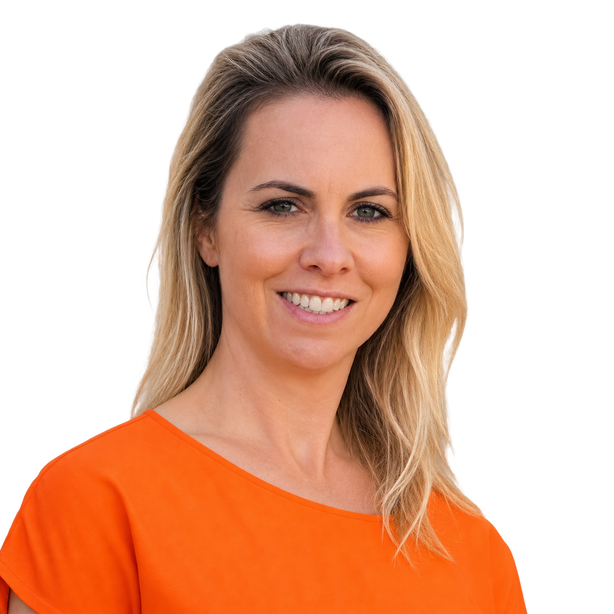
How Olio turned spare food into a business, with Tessa Clarke
Tessa Clarke

Master Public Speaking (Even If You're Terrified of It)
Dr. Alexander McWilliam

From Gamer to Web3 Disruptor: How Amos Whitewolf Is Rebuilding Gamer Trust with PerionXP
Amos Whitewolf

From 0 to $25M ARR Bootstrapped: Adam Robinson’s Blueprint for SaaS Growth Without Funding
Adam Robinson


How to Scale as a CEO – Mindset, Strategy & Leadership Shifts, with Joe Leech, CEO Coach
Joe Leech
